At first glance, economics may appear to be a field dominated by models, graphs, and equations.
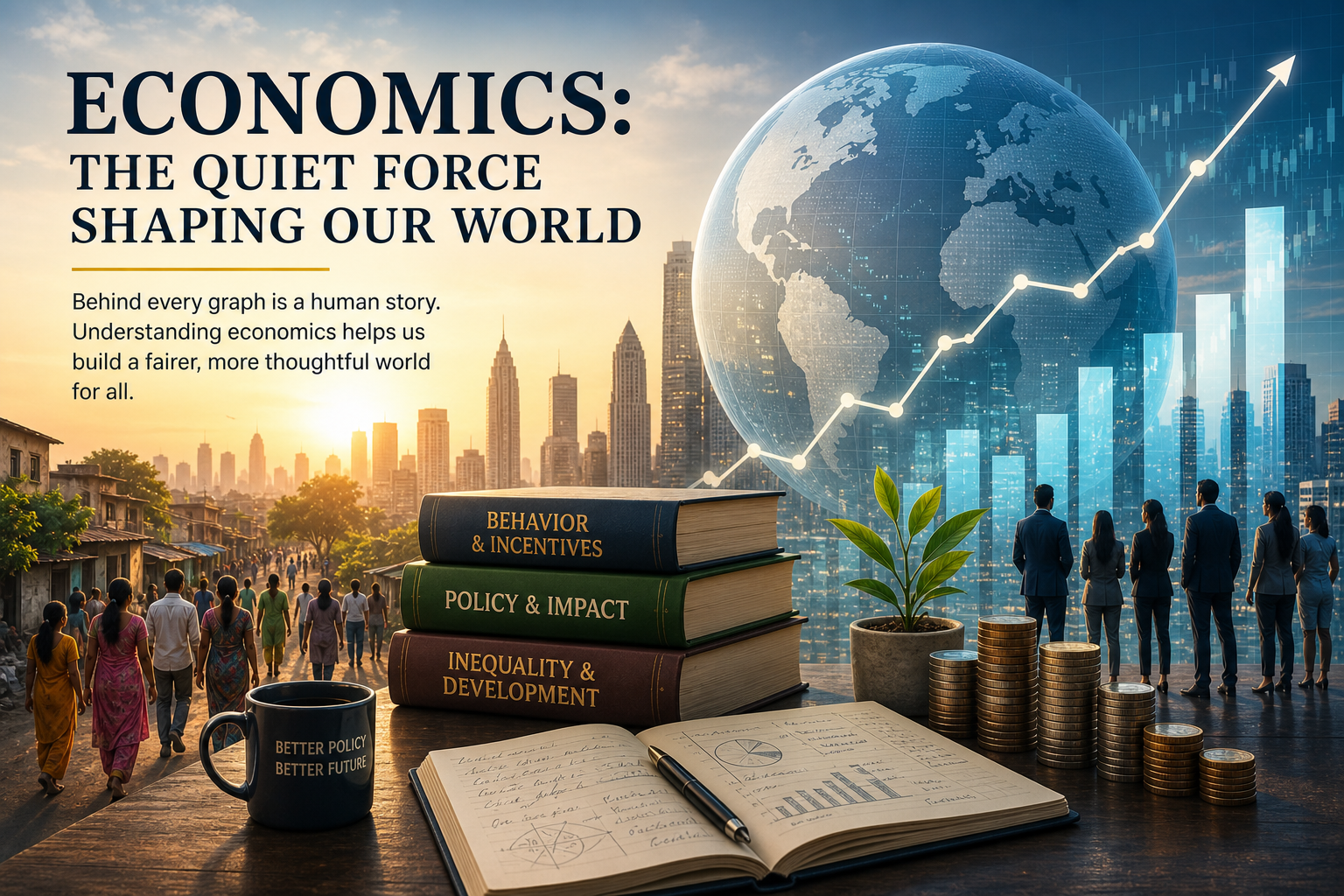
Behind each demand curve lies a family adjusting to rising fuel prices. Behind each GDP report are lives shaped by the uneven promise of growth. Economics, at its core, is not just about how the world works—it’s about why it works the way it does, and for whom.
What draws me in is the remarkable way economic thought connects theory to impact:
- How do incentives quietly sculpt our decisions?
- Can well-intentioned policy bridge inequality without unintended harm?
- And what does “development” truly mean for communities on the margins?
These aren’t just academic questions. They are lived realities. And it’s through conversations—in lectures, spirited debates, and even over humble cups of chai—that I’ve realized economics is not a dry science, but a powerful lens for empathy, critique, and change.
Whether you’re intrigued by fiscal structures, behavioral insights, or grassroots solutions, I believe there’s space for all of us to engage—and to challenge the status quo. Let’s build a community that sees economics not merely as a toolkit, but as a means to build a fairer, more thoughtful world.
Because in the end, economics isn’t just about systems.
It’s about people. And their stories matter.